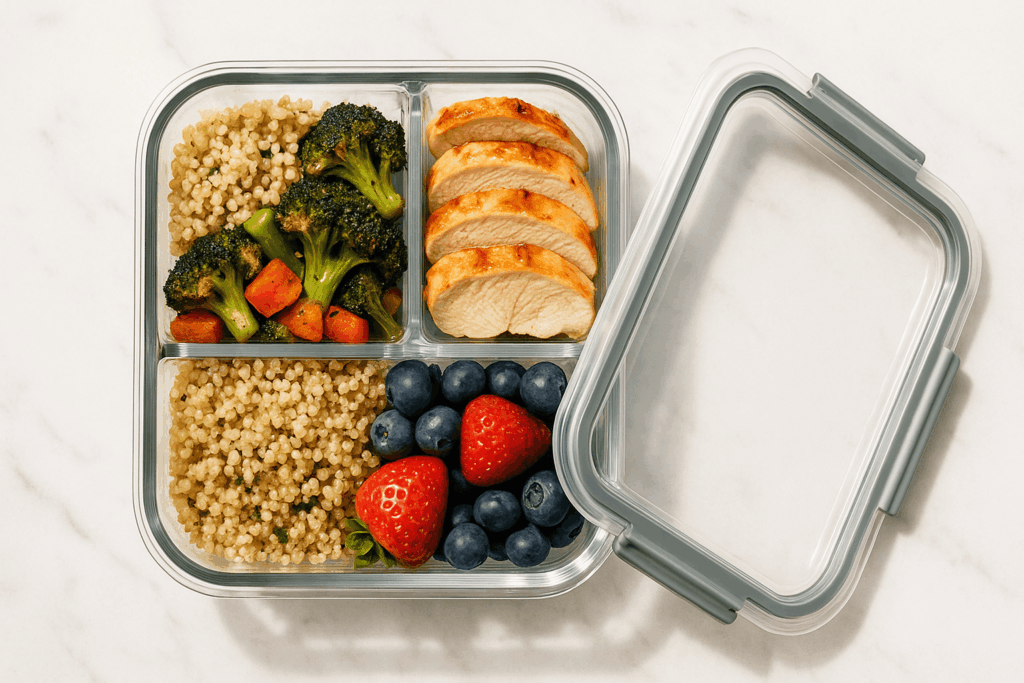
It’s the nightly juggle: leftovers from dinner, tomorrow’s lunch, and the hope that nothing leaks or smells plastic-y by noon. Plastic lids bend, stains set in, and that “fresh” salad smells like last week’s curry.
Commuters and parents know the drill — by Wednesday, tubs are cloudy, seals loose, and you’re wondering what’s really touching your food. Even the “BPA-free” promises don’t stop tomato sauce from leaving its mark.
Glass meal-prep containers change the game. Food rests only on tempered glass, while the silicone gasket in the lid locks in sauces without clouding, odors, or plastic contact. They slide from oven to fridge, then into your bag, and still look clear after the dishwasher. If the lid ever wears out, the base keeps going — no full set wasted.
Our policy: PF-Silicone = food touches stainless or glass, and silicone is limited to the gasket/lid seal.
Disclosure: As an Amazon Associate, I earn from qualifying purchases.
See our pick: a divided glass meal-prep container set with a silicone gasket (leak-resistant seal).
1) Plastic-free food contact
Tempered glass + silicone gasket lids keep food touching non-plastic surfaces.
2) Oven-to-fridge versatility
Most glass bases handle the oven (check brand limits) and cool safely—great for batch cooking.
3) Fewer odors and stains
Glass resists staining from sauces and doesn’t hold smells the way plastic can.
4) Long-term clarity
No clouding after the dishwasher. You can see the contents at a glance.
5) Real leak resistance
A snug silicone seal helps with soups and saucy dishes (always upright in a bag).
6) Better longevity
If a lid eventually wears out, the glass base keeps going.
When glass isn’t ideal
Weight matters for commuters, and glass can shatter if dropped—use steel or glassine for on-the-go dry snacks.
FAQ
Are glass meal-prep containers microwave-safe?
Most glass bases are microwave-safe; do not microwave metal clips or stainless lids. Check your brand’s instructions.
Can the silicone gasket touch food?
Incidental rim contact happens, but food rests on the glass. The silicone’s job is sealing, not holding food.
Will it leak with soups?
Gasketed lids are great for saucy dishes when kept upright. For sloshy soups, use a dedicated soup container.
Are glass containers heavy for commuting?
They’re heavier than plastic. For lightweight days, use stainless steel for mains and glassine bags for dry snacks.
Can I put hot food in right away?
Let very hot food cool briefly before sealing so steam doesn’t build up pressure. Then close the gasketed lid.